
Yes you can learn to speak, listen to, and understand conversational Japanese without kanji, since hiragana and katakana alone can represent every sound in the language. But you cannot read native Japanese content (menus, signs, books, news) fluently without kanji, since it’s used everywhere
A lot of beginners ask this after finishing hiragana and katakana: “Do I actually need kanji, or can I just skip it?” The honest answer depends entirely on what you want Japanese for.
Not sure how much Kanji you actually need?
Talk to Nihon Path on WhatsApp — get free guidance on whether to focus on speaking, JLPT, or full reading fluency.
Chat with us on WhatsApp+91 93116 88893 • 5,000+ students • 100% online
Why Is Kanji Used in Japanese?
Japanese uses three writing systems:
- Hiragana — mainly grammatical elements and native Japanese words
- Katakana — foreign words, names, emphasis and certain other uses
- Kanji — Chinese-derived characters used extensively for words and concepts
The three systems work together.
For example:
わたしは がくせいです。
can be written as:
私は学生です。
The kanji make important words visually distinct.
私 = I
学生 = student
This makes longer sentences easier to scan and understand.
Is It Possible to Learn Japanese Without Kanji?
Technically, yes. Every word in Japanese can be written in hiragana alone — kanji is a writing convenience, not a requirement for the language to function. Children in Japan speak fluently for years before they learn kanji in school.
So if your goal is speaking, listening, and basic communication, kanji is not mandatory.
What You CAN Do Without Kanji
- Hold everyday conversations
- Understand spoken Japanese (anime, dramas, podcasts)
- Read material written for beginners or children, which often uses furigana or full hiragana
- Pass JLPT N5 with a fairly small kanji list, though not zero
- Travel and get by in most day-to-day situations in Japan
What You CANNOT Do Without Kanji
- Read native newspapers, signs, restaurant menus, or novels
- Read most websites, apps, or product packaging in Japan
- Pass JLPT N3 and above, which require substantial kanji knowledge
- Work in a Japanese-language professional environment
- Read text messages or social media from Japanese friends comfortably
This is the real trade-off: skipping kanji keeps things easier short-term, but it caps how far you can go with reading — and reading is a huge part of how the language shows up in daily life, even in casual contexts like texting.
Can I Learn Japanese Using Only Hiragana?
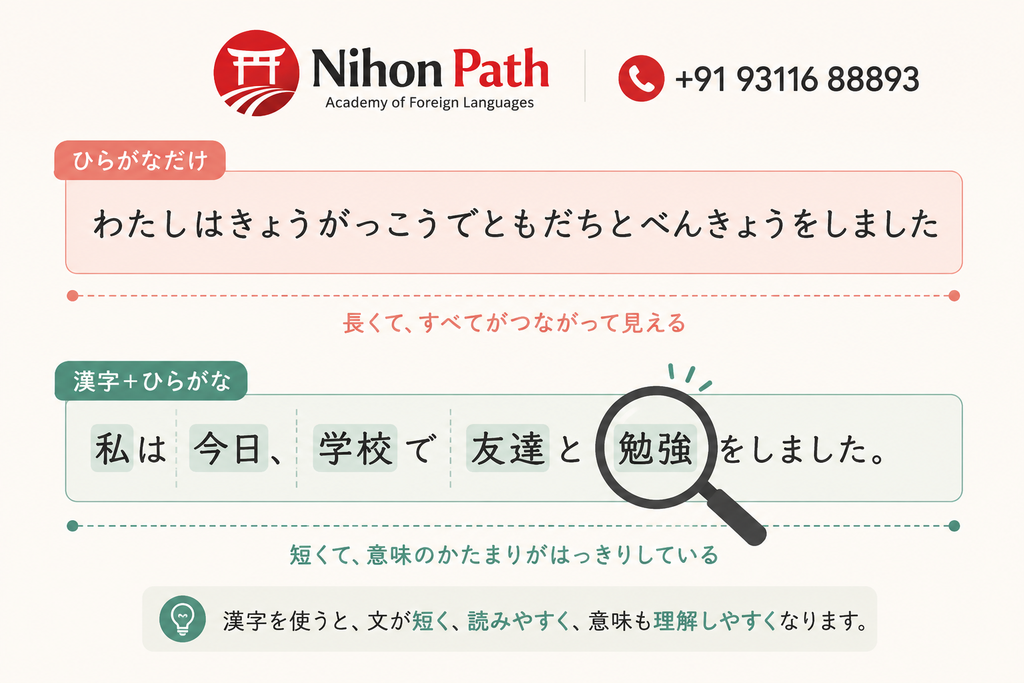
Technically yes, but it isn’t realistic long-term. Kana-only Japanese has no visual word separation, so reading gets harder, not easier, as sentences grow.
わたしは まいにち とうきょうの だいがくで にほんごを べんきょうしています。 私は毎日東京の大学で日本語を勉強しています。
Both say the same thing, but the kanji version is far faster to scan once you’re used to it — kanji visually breaks up words the way spaces do in English. Kana-only works for early practice, not for real reading material like websites, menus, or news.
Do I Need Kanji for JLPT N5?
If you’re planning to take the JLPT N5, you should not completely ignore kanji.
A recent beginner preparing for N5 after learning hiragana and katakana asked essentially the same question: how much kanji should they learn and when should they introduce it?
Another learner preparing for N5 found that kanji became one of their weak areas when they started practicing actual exam questions.
The important thing is not to obsess over an exact “official N5 kanji list.”
The JLPT does not publish a simple official master list of “N5 kanji” that guarantees exactly what will appear.
Instead, focus on the kanji and vocabulary used in your N5-level learning materials and practice tests.
Why Kanji Exists in the First Place
Japanese has a large number of homophones — words that sound identical but mean different things. Kanji removes that ambiguity visually.
For example, こうえん can mean:
- 公園 — park
- 講演 — lecture
- 後援 — support/sponsorship
Written only in hiragana, a reader has to guess the meaning from context every time. Kanji removes that guesswork instantly, which is part of why it never disappeared from the writing system.
How Many Kanji Should a Beginner Learn?
Don’t make the number your main goal.
Instead of thinking:
“I need to learn 100 kanji.” think: “I want to understand the kanji appearing in the Japanese I’m studying.”
That said, a beginner can gradually build a foundation of common kanji as they progress through beginner Japanese materials.
For example:
人 — person
日 — day/sun
月 — month/moon
水 — water
火 — fire
山 — mountain
川 — river
学 — study
校 — school
食 — eat/food
You don’t have to master every reading immediately.
Learn them through words.
Do I Need Kanji for JLPT N5?
Yes, you need kanji for JLPT N5 but only a small, manageable set of around 100 basic characters, not the full kanji system. N5 tests kanji through reading passages, vocabulary, and short sentences, so you can’t skip it entirely. The good news is that this list overlaps heavily with the everyday kanji you’d already learn through beginner vocabulary, so it doesn’t require separate, isolated memorization.
Is It Better to Learn Kanji Separately or With Vocabulary?
For most beginners, learning kanji through vocabulary is a practical approach.
Compare these two methods.
Method 1: Isolated kanji
学 = study
校 = school
生 = life
You memorize each character individually.
Method 2: Vocabulary
学生 = student
学校 = school
先生 = teacher
Now you’re seeing the characters inside words you’re actually likely to use.
The second approach gives you context.
It also helps you understand why a particular reading is being used.
This doesn’t mean dedicated kanji resources are useless. Apps, flashcards and kanji books can be very helpful, especially for review. The important point is that kanji should connect to real vocabulary and reading rather than becoming an isolated memorization exercise.
Can I Learn Japanese Through Speaking Without Kanji?
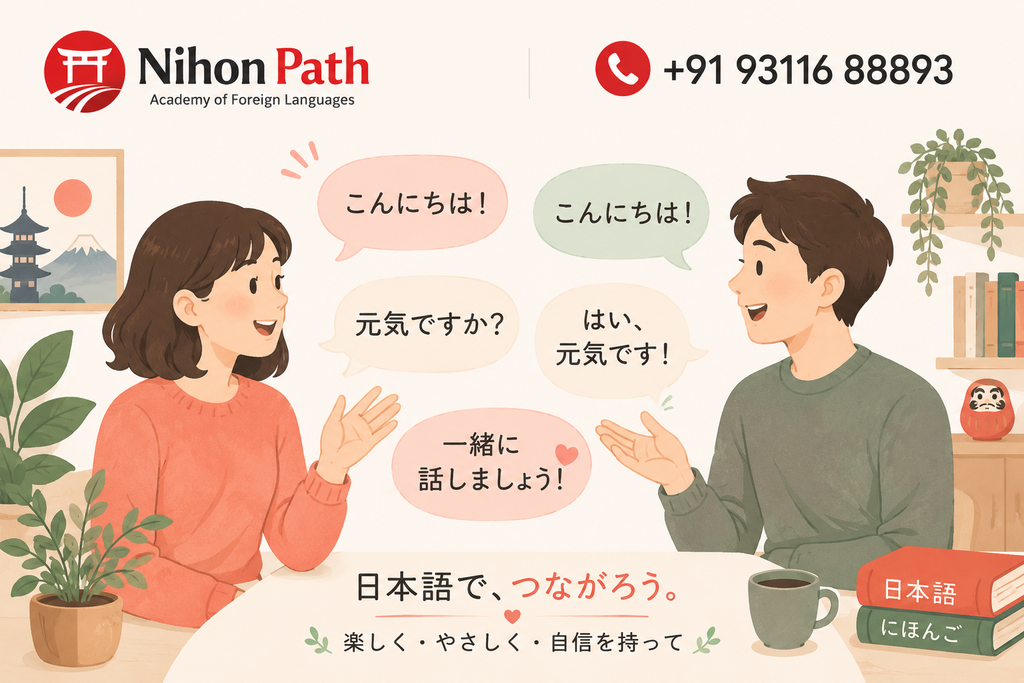
Yes, and it’s a solid way to start if your goal is communication, not reading. You can practice self-introductions, greetings, food, hobbies, and everyday conversation while picking up the related kanji gradually. Speaking ability doesn’t require kanji fluency first.
Does Anime Help With Kanji?
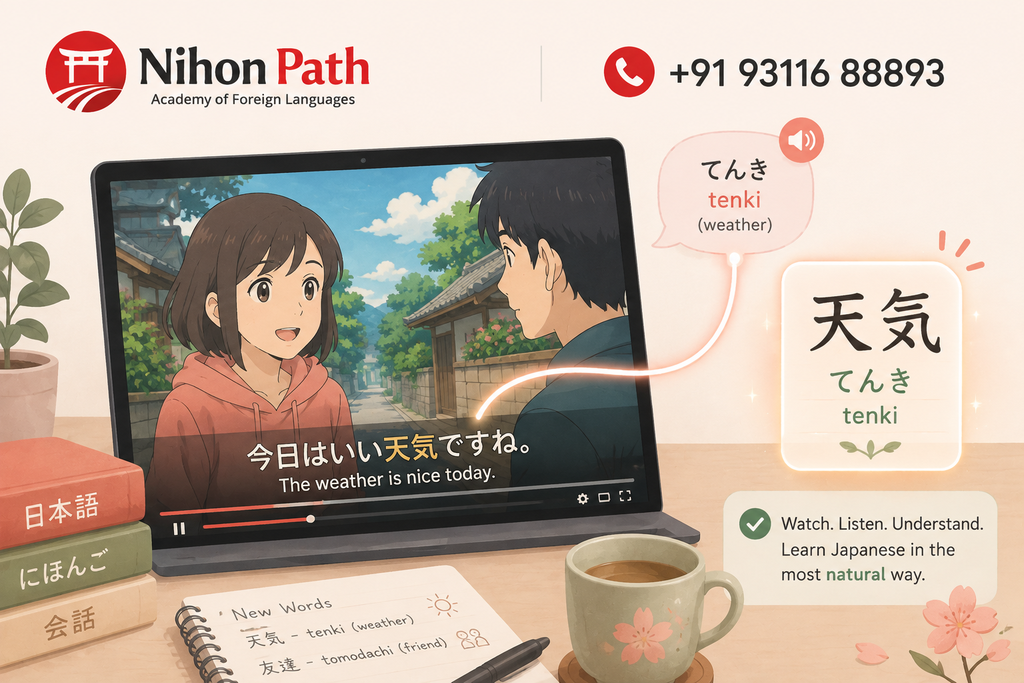
Watching with Japanese subtitles exposes you to kanji through a sound → word → kanji connection, which can make characters easier to remember than flashcards alone. But anime often uses exaggerated or informal speech, so treat it as extra exposure alongside structured grammar and vocabulary study, not a replacement for it.
What If My Goal Is Only Conversation?
Then kanji can wait. Prioritize hiragana, katakana, grammar, vocabulary, listening, and speaking first, and add kanji gradually. But if you’re aiming for JLPT, studying or working in Japan, or reading Japanese independently, start building kanji sooner rather than later.
prioritize:
- Hiragana
- Katakana
- Basic grammar
- Everyday vocabulary
- Listening
- Pronunciation
- Speaking
Then introduce kanji gradually.
But if your goal is eventually to:
- pass JLPT
- study in Japan
- work in Japan
- read Japanese books
- understand Japanese websites
- live independently in Japan
you should start building kanji knowledge sooner rather than later.
The Easiest Way to Think About Kanji
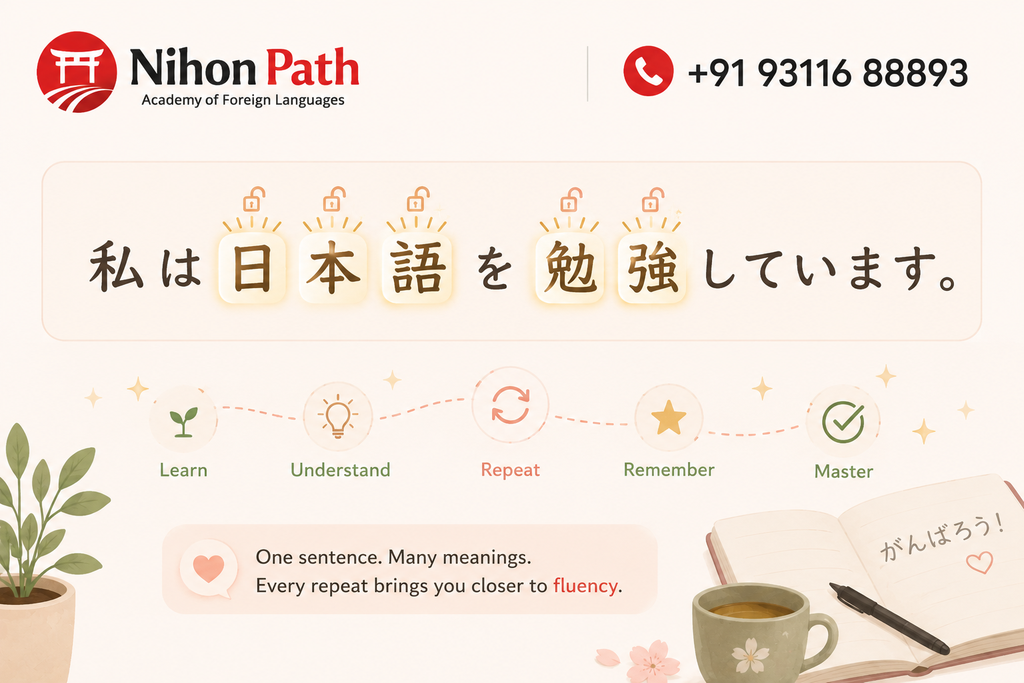
Don’t think: “I have to learn thousands of kanji.” Think: “I need to learn the kanji used by the Japanese I am learning.”
That’s a much less intimidating goal.
If you’re learning the sentence:
日本語を勉強しています。
you don’t need to suddenly memorize every reading of:
日・本・語・勉・強
You simply learn the sentence and vocabulary naturally.
Over time, the characters begin appearing again and again.
That repetition is powerful.
So Should You Learn Kanji or Not?
It depends on your goal:
If your goal is speaking only (travel, casual interest, talking with friends) — you can genuinely deprioritize kanji and focus on grammar, vocabulary, listening, and speaking instead.
If your goal is JLPT, working, studying, or living in Japan — kanji isn’t optional. You’ll need it for reading comprehension, which is a required section of every JLPT level from N5 upward.
If you’re unsure yet — the safest approach is to learn kanji gradually and in small amounts, the same way you’d build vocabulary, rather than treating it as an all-or-nothing decision. This keeps your options open without slowing down speaking and listening progress.
A Realistic Middle Path
Most learners don’t need to pick one extreme. A workable approach:
- Prioritize grammar, vocabulary, listening, and speaking early on
- Learn a small set of high-frequency kanji alongside vocabulary, not as a separate massive project
- Rely on furigana-supported reading material in the beginning
- Increase kanji study only when reading becomes a goal (JLPT, work, or living in Japan)
This way, kanji never becomes a bottleneck that stops you from speaking — but you’re not shutting the door on reading either.
At Nihon Path, beginner courses are structured around exactly this balance — building real speaking ability from day one, while introducing kanji gradually so it never overwhelms your progress. If you’re unsure how much kanji you actually need for your goals, this is worth clarifying early rather than guessing.
Not sure how much kanji you’ll need? Chat with us on WhatsApp — +91 93116 88893.
Not sure how much Kanji you actually need?
Talk to Nihon Path on WhatsApp — get free guidance on whether to focus on speaking, JLPT, or full reading fluency.
Chat with us on WhatsApp+91 93116 88893 • 5,000+ students • 100% online
Key Takeaways
- You can speak and understand spoken Japanese without kanji — hiragana and katakana cover every sound
- Reading native Japanese content (menus, texts, novels, JLPT N3+) requires kanji
- Kanji exists mainly to remove ambiguity between words that sound alike
- The best approach for most beginners: prioritize speaking early, add kanji gradually rather than all at once
- Your goal (casual speaking vs. JLPT/work/living in Japan) should decide how much kanji you actually need