
Planning a Trip to Japan? Learn These 10 Japanese Words Before You Go
Planning your first trip to Japan? Learning a few Japanese words for tourists can make everyday situations easier, from ordering food to asking for directions. You do not need to speak Japanese fluently to get started. Just learn these 10 useful words and phrases before you pack your bags.
Imagine walking through the streets of Tokyo, ordering ramen at a small restaurant, or exploring the shops in Osaka. Everything looks exciting, but then someone speaks to you in Japanese, and you have no idea what to say.
Sounds familiar?
Japan is a wonderful place to explore, but knowing a little Japanese can make your trip more comfortable. While you can manage many tourist situations with translation apps, learning a few common expressions helps you communicate more confidently and show respect for the local culture.
The good news is that you do not need to learn hundreds of words before your flight. Learn these 10 basic Japanese phrases to make your trip to Japan easier and more enjoyable.
1. Konnichiwa (こんにちは) — Hello
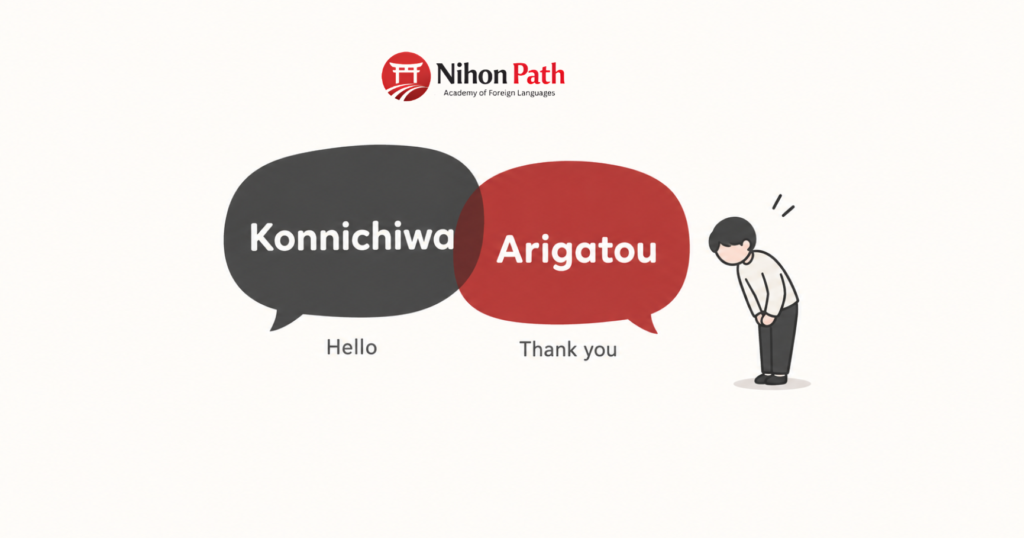
One of the first Japanese words to know before visiting Japan is Konnichiwa, which means hello.
You can use it when greeting someone For eg, if you enter a shop or meet someone you want to speak with, this is a useful expression to know.
Example: You enter a local shop and want to greet the shopkeeper politely.
You: Konnichiwa!
It’s an easy way to start a conversation with someone. You may also hear Ohayou gozaimasu in the morning and Konbanwa in the evening.
2. Arigatou (ありがとう) — Thank You
You will probably need to say thank you many times while travelling. Whether someone serves your food, helps you find a train platform, or gives you directions, Arigatou is a useful word.
For a more polite way to say thank you, use Arigatou gozaimasu (ありがとうございます).
Example:
A restaurant worker brings your order.
You: Arigatou gozaimasu!
Learning this expression is a small step, but it can help you communicate politely during everyday interactions.
3. Sumimasen (すみません) — Excuse Me or Sorry
If you learn only a few Japanese phrases for tourists, make sure Sumimasen is one of them.
It means “excuse me” or “sorry.” You can use it to get someone’s attention, say sorry for a small mistake, or politely ask someone a question.
Example: You want to ask someone where the macdonalds is.
You: Sumimasen!
Once you have their attention, you can ask your question or show them the place on a map.
You may also hear this word in restaurants when someone wants to call a server.
4. Hai (はい) — Yes
Hai means yes. It is a short and useful expression that you may hear frequently during conversations.
For example, a shop assistant might ask whether you need a bag, or a restaurant worker might confirm your order.
Example:
Shop assistant: Do you need a bag?
You: Hai.
Remember that Hai can also signal that you are listening or acknowledging what someone has said. Its exact meaning depends on the context.
5. Iie (いいえ) — No
Knowing how to say “no” is just as important as knowing how to say “yes.”
Iie means no. You can use it when answering a simple question or declining something, although a more polite expression may be appropriate in some situations.
Example:
Someone asks if you need another item.
You: Iie, arigatou gozaimasu.
This means “No, thank you.” Learning both Hai and Iie helps you understand simple questions and respond to them.
6. Ikura desu ka? (いくらですか) — How Much Is It?
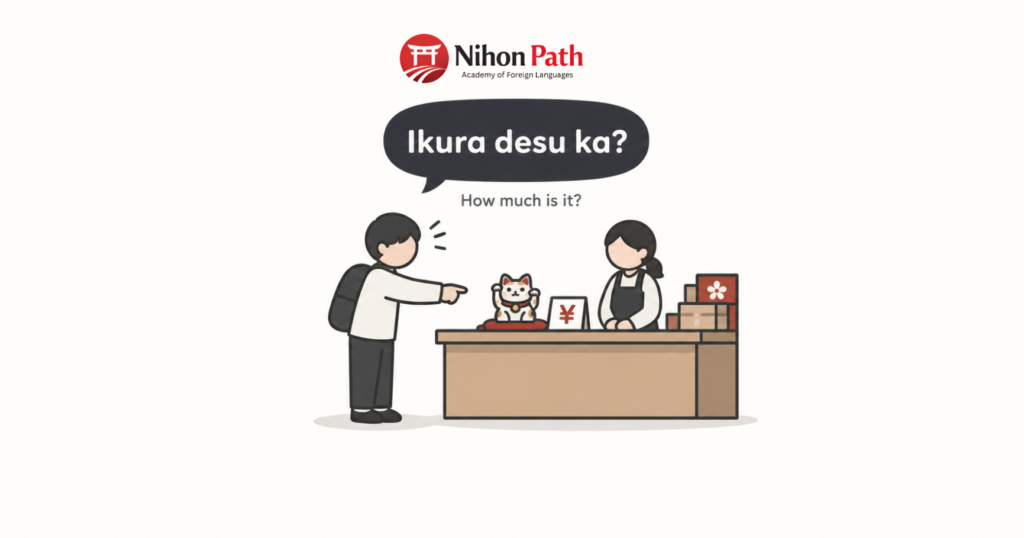
Japan has plenty to explore, from souvenir shops and convenience stores to local markets. If you want to know the price of something, learn Ikura desu ka?
This phrase means “How much is it?”
Example:
You find a souvenir you want to buy.
You: Sumimasen, kore wa ikura desu ka?
Meaning: Excuse me, how much is this?
You can point to the item while asking. This is especially helpful when you are still learning Japanese and cannot form longer sentences comfortably.
7. Kudasai (ください) — Please Give Me
Kudasai is useful when asking for something. It often comes after the name of the item you want.
For example, if you want water, you can say:
Mizu o kudasai (水をください).
Meaning: Water, please.
You can use similar patterns when ordering drinks, asking for a particular item, or making simple requests.
Example:
You are at a restaurant and want water.
You: Mizu o kudasai.
Practise the names of a few common foods and drinks along with this phrase. It will give you more flexibility when ordering.
8. Toire (トイレ) — Toilet
When travelling, knowing how to ask about basic facilities can make your trip easier and more comfortable. Toire means toilet or restroom.
If you need to find one, you can ask:
Toire wa doko desu ka? (トイレはどこですか)
Meaning: Where is the toilet?
This is a practical example of how learning just a few words can help you communicate a complete idea.
You can use the same question pattern with other places once you learn their Japanese names.
9. Eki (駅) — Train Station
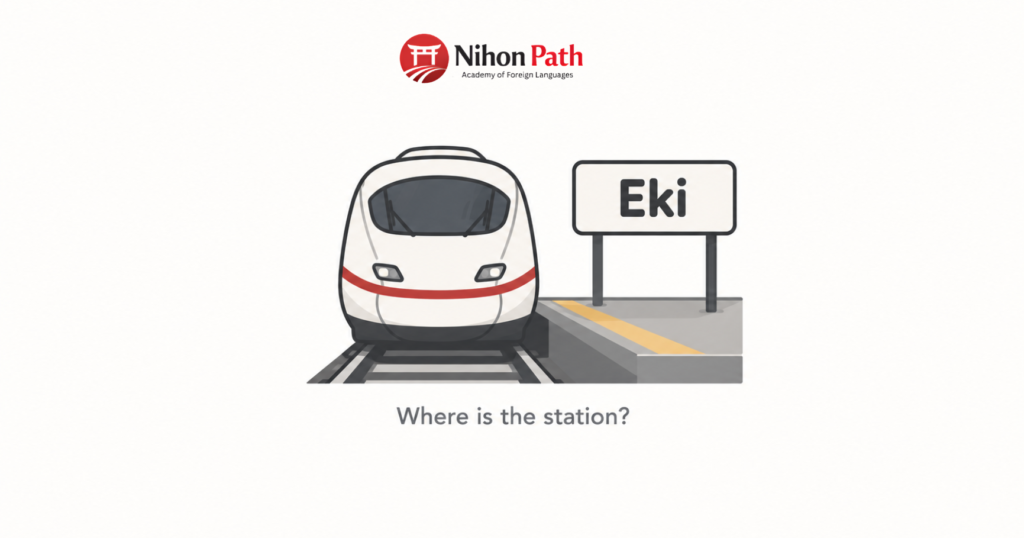
Trains are an important part of travelling around many Japanese cities. You may use them to explore Tokyo, visit Kyoto, or travel between different neighbourhoods.
The word Eki means train station.
To ask where the station is, say:
Eki wa doko desu ka? (駅はどこですか)
Meaning: Where is the train station?
You can also show a station name or destination on your phone if you are unsure how to pronounce it.
Learning this word is a useful starting point for understanding signs, asking for directions, and navigating public transport.
10. Tasukete (助けて) — Help!
Hopefully, your trip goes smoothly, but it is still useful to know how to ask for help.
Tasukete means “Help!” It is a direct expression that can be used in an urgent situation.
A more polite request is Tasukete kudasai (助けてください), meaning “Please help me.”
For non-emergency situations, you can also say Sumimasen to get someone’s attention before explaining what you need.
If you face an emergency in Japan, seek assistance from local authorities or emergency services rather than relying only on your language skills.
Tips for Using Japanese During Your Trip
Learning these Japanese travel vocabulary basics is a good start, but a few habits can make them more useful.
- Practise pronunciation: Listen to each phrase and repeat it aloud before your trip.
- Save phrases on your phone: Keep a small list that you can check when needed.
- Use translation tools: They can help when a conversation becomes more complicated.
- Speak politely: When unsure, polite expressions such as Arigatou gozaimasu are a good choice.
- Do not worry about mistakes: People may not understand you every time, and that is okay. Try again or use a map or translation app.
You do not need perfect pronunciation to begin practising. The aim is to understand common expressions and become more comfortable using them.
Want to Learn More Japanese Before Your Japan Trip?
Learning a few expressions for travel is useful, but if you want to understand conversations, read signs more easily, or explore Japanese culture in greater depth, learning the language step by step can help.
Nihon Path offers Japanese language courses for learners who want to build their skills from the basics. You can explore our online Japanese N5 course if you want a structured starting point.
You can also read more beginner-friendly guides on the Nihon Path blog to continue learning at your own pace.
Your first trip to Japan can be a great opportunity to experience the language and culture. Start with a few useful phrases, practise them regularly, and build from there.
Frequently Asked Questions
Do I need to know Japanese before visiting Japan?
No. You can visit Japan without speaking Japanese, especially if you use maps and translation apps. However, knowing a few basic expressions can make everyday interactions easier.
What Japanese phrases should I learn before travelling?
Start with greetings, thank-you expressions, asking prices, requesting items, and asking for directions. These phrases are useful in shops, restaurants and public places.
Can I learn basic Japanese before my trip?
Yes. Start with a small set of common words and practise them every day. Learning a few phrases well is a more realistic goal than trying to memorize the entire language in a short time.
Is Japanese difficult for tourists to learn?
You can learn useful travel expressions without mastering Japanese grammar or all its writing systems. Begin with pronunciation and common phrases, then learn more if you want to continue.